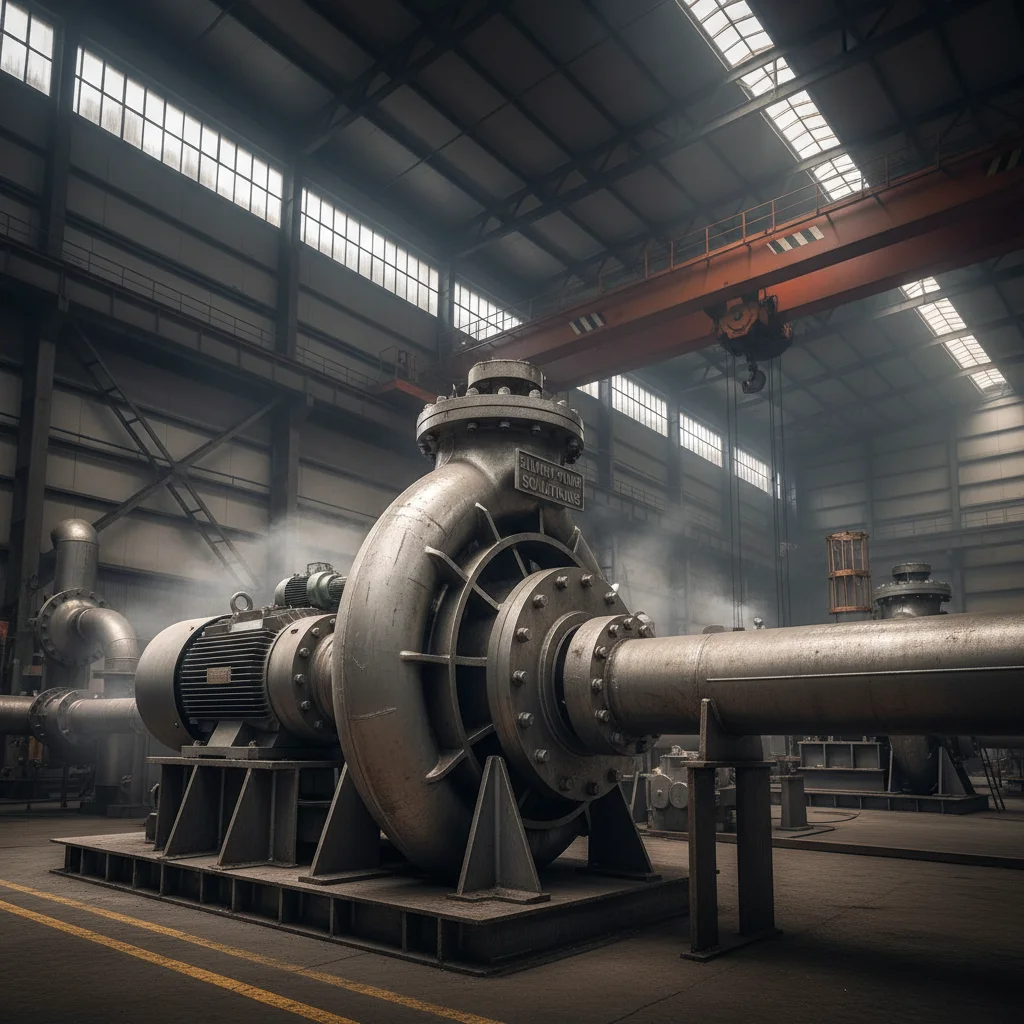
Selecting the right equipment for handling abrasive materials is a critical decision for any industrial operation involving the movement of solids in liquids. Understanding the various slurry pump types is essential for optimizing operational efficiency, reducing unplanned downtime, and extending the lifespan of your machinery in harsh environments.
From mining and metallurgy to municipal dredging, the demand for robust pumping solutions continues to grow globally. The ability to transport sand, gravel, and tailings requires a deep understanding of pump hydraulics and material science to ensure that the chosen system can withstand extreme erosion and corrosion without frequent failures.
In this comprehensive guide, we explore the technical nuances of different slurry pump types, focusing on high-performance solutions like the HSSP Series Submersible Slurry Pump, to help engineers and procurement managers make informed investment decisions for their heavy-duty industrial applications.

Understanding the Global Context of Slurry Pumping
On a global scale, the extraction of mineral resources and the management of industrial waste rely heavily on the efficiency of transport systems. The choice between various slurry pump types often determines the profitability of a mining site or the environmental safety of a chemical plant, as inefficient pumping leads to pipeline blockages and costly emergency repairs.
Modern industry faces the challenge of handling increasingly abrasive materials with higher concentrations of solids. This has pushed the development of specialized submersible designs, such as the HSSP series, which integrate advanced materials to combat the aggressive nature of tailings and cinder, ensuring that global production targets are met without compromising equipment integrity.
Defining the Various Slurry Pump Types
Slurry pump types refer to a specialized category of centrifugal pumps designed to move fluids containing suspended solid particles. Unlike standard water pumps, these machines are engineered to handle "slurries"—mixtures that can range from thin, sandy water to thick, abrasive pastes containing gravel or metallurgical cinder.
The primary distinction among these types is their installation method and internal architecture. For instance, submersible slurry pumps like the HSSP series are designed for pit installation, utilizing a vertical single-shell axial suction centrifugal design that allows them to operate directly within the fluid, eliminating the need for external suction piping.
Ultimately, the definition of these pumps centers on their ability to balance flow rate and head while resisting the erosive force of the particles they transport. By optimizing the impeller and volute design, these pumps transform a potentially destructive fluid into a manageable industrial stream.
Core Technical Components for Durability
The longevity of different slurry pump types depends heavily on their material composition. High-chrome alloys and specialized hardened metals are used in the impeller and casing to ensure that the pump can withstand the constant bombardment of abrasive particles without rapid wear.
A critical component in modern submersible designs is the seal system. In the HSSP series, an advanced mechanical seal combined with a design that requires no traditional shaft seal significantly reduces potential leak points, which is a common failure mode in many standard slurry pump types.
Furthermore, the lubrication system plays a vital role in operational stability. The use of grease-lubricated bearings ensures long-term durability and minimizes the need for frequent oil changes, making these pumps ideal for unmanned, automated environments where maintenance access may be limited.
Performance Metrics of Industrial Slurry Pumps
Evaluating the efficiency of slurry pump types requires looking at the relationship between flow rate, maximum head, and energy consumption. High-performance models, such as the HSSP series, can achieve flow rates up to 10,000 m³/h with a maximum head of 55m, providing immense versatility for large-scale industrial projects.
Beyond raw power, operational stability is measured by vibration levels and noise. An optimized volute chamber design is essential to ensure the pump operates with zero vibration, which prevents premature fatigue of the motor and structural components, thereby reducing the total cost of ownership over the pump's lifecycle.
Comparative Efficiency of Slurry Pump Types
Global Applications and Sector-Specific Use Cases
The application of various slurry pump types spans across several critical industries. In the mining and metallurgy sectors, these pumps are indispensable for transporting tailings and ore slurries from the processing plant to storage facilities, where the ability to handle heavy sand and gravel is paramount.
Beyond mining, municipal dredging projects and chemical plants utilize submersible slurry pumps to clear sediment from harbors or move corrosive waste. The HSSP series' dual-rail system and adjustable shaft length make it particularly effective for pit installations in these diverse environments, allowing for precise fit regardless of depth.
Long-Term Value and Operational Advantages
Investing in premium slurry pump types translates directly into lower operational overhead. While the initial cost may be higher than standard pumps, the extended wear life cycle—driven by hardened materials and optimized impeller structures—drastically reduces the frequency of impeller replacements.
The integration of smart automation, such as automatic water level control and protection cabinets, allows for unmanned operation. This removes the need for constant manual monitoring, reducing labor costs and eliminating human error in the management of fluid levels, which prevents dangerous dry-run scenarios.
Ultimately, the value is found in the reliability of the system. Low-noise, vibration-free performance not only protects the machinery but also improves the working environment for personnel, fostering a culture of safety and technological trust within the industrial facility.
Future Innovations in Submersible Slurry Technology
The future of slurry pump types is moving toward complete digital transformation. We are seeing a shift toward integrated performance monitoring, where real-time tracking of flow rates and head allows operators to optimize energy consumption (KW) relative to output, significantly reducing the carbon footprint of industrial pumping.
Materials science continues to evolve, with the introduction of nano-ceramic coatings and hybrid alloys that promise even greater resistance to erosion. These innovations will allow pumps to handle even more aggressive slurries with minimal wear, further extending the interval between maintenance cycles.
Additionally, the trend toward "Smart Asset Management" means that pumps will soon be able to predict their own failure. Integrated fault detection systems will alert operators to abnormal vibrations before a breakdown occurs, moving the industry from reactive maintenance to a proactive, predictive model.
Comparison of HSSP Series vs. Standard Submersible Pumps
| Metric |
Standard Submersible |
HSSP Series Slurry Pump |
Operational Impact |
| Wear Life Cycle |
Short (Frequent Wear) |
Extended (Hardened) |
Lower Replacement Cost |
| Maintenance |
High (Manual) |
Low (Automatic) |
Reduced Labor Costs |
| Slurry Handling |
Light Fluids only |
Heavy Sand/Gravel |
Higher Application Range |
| Noise/Vibration |
Significant Vibration |
Ultra-low / Stable |
Extended Component Life |
| Control System |
Manual Switch |
Auto Level Control |
Unmanned Operation |
| Total Cost (TCO) |
High (Downtime) |
Low (Efficiency) |
Improved ROI |
FAQS
The HSSP series is engineered with a specialized impeller structure and high-strength hardened materials specifically designed to resist the erosive effects of sand, gravel, and tailings. Unlike standard pumps, they utilize an advanced mechanical seal and a robust volute chamber that prevents premature wear from high-velocity abrasive particles.
Yes, the HSSP series features an integrated automatic water level control system. This system, paired with dedicated protection cabinets, allows the pump to operate autonomously based on the fluid level in the pit, ensuring seamless operation and preventing dry-running, which can damage the impeller.
These pumps are primarily utilized in mining, metallurgy, electric power generation, chemical processing, and environmental protection. They are particularly valuable for municipal dredging projects where heavy sediment needs to be removed from depths without the need for complex external piping.
The HSSP series utilizes grease-lubricated bearings. This choice is strategic, as grease provides a more durable lubricant barrier against contaminants and significantly reduces the frequency of maintenance compared to oil-lubricated systems, ensuring long-term reliability in harsh pits.
No, the specific design of the HSSP series eliminates the need for a traditional shaft seal. By removing this common point of failure, the pump reduces potential leak points and lowers the overall maintenance requirements, making it more reliable for heavy-duty continuous use.
Depending on the specific model and configuration chosen, the HSSP series can achieve a maximum flow rate of up to 10,000 m³/h. This high capacity makes it suitable for the most demanding industrial transport applications where large volumes of slurry must be moved quickly.
Conclusion
Understanding the diverse range of slurry pump types is the foundation for building a resilient and efficient industrial fluid transport system. By focusing on key metrics such as wear resistance, automation, and operational stability—as exemplified by the HSSP Series Submersible Slurry Pump—companies can significantly reduce their total cost of ownership and minimize costly downtime.
As the industry moves toward smarter, more sustainable operations, the integration of real-time monitoring and advanced material science will continue to redefine the capabilities of slurry transport. We recommend evaluating your specific slurry characteristics—such as particle size and abrasiveness—to select the pump type that offers the best balance of performance and longevity. Visit our website for professional guidance: www.hihornpump.com