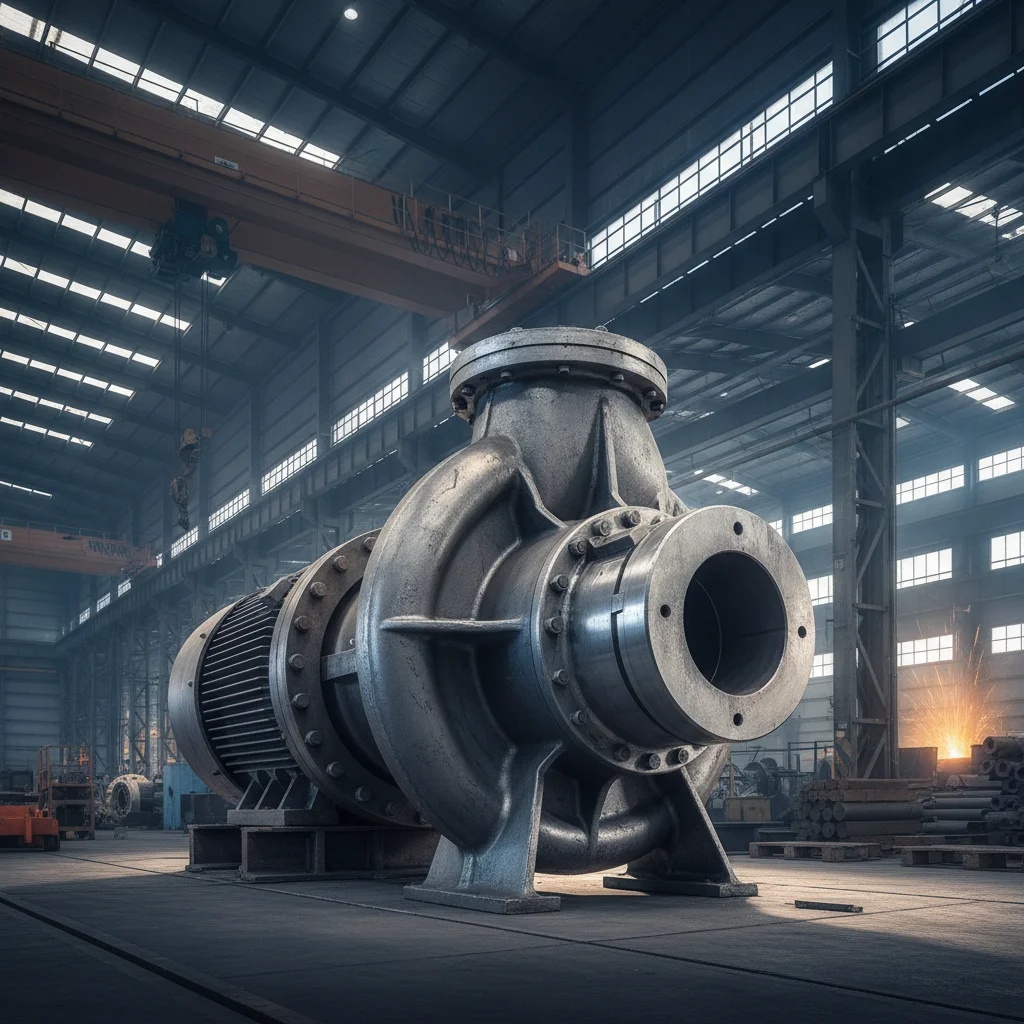
In the demanding world of mineral processing and metallurgy, the ability to transport abrasive materials efficiently is the cornerstone of operational productivity. A heavy duty slurry pump is not merely a piece of equipment but a critical engineered solution designed to handle the most punishing fluids, from ore concentrates to tailings. Without these specialized machines, the continuous flow of production in mining plants would grind to a halt due to the extreme wear caused by dense, particulate-laden slurries.
Global industrial standards emphasize the need for high-pressure centrifugal systems that can withstand constant abrasion while maintaining hydraulic efficiency. The challenge lies in balancing the sheer strength of the pump casing with the flexibility of the liners to ensure a long service life. As mining operations push into deeper deposits and handle more complex ore bodies, the reliance on robust pumping technology has never been greater to minimize downtime and operational costs.
For professionals seeking reliable performance in extreme conditions, choosing a high-quality heavy duty slurry pump is essential for maintaining the integrity of hydrocyclone feeds and flotation circuits. By integrating advanced materials like high chrome alloys and specialized rubber linings, these pumps transform a high-wear liability into a streamlined industrial asset.

Engineering Fundamentals of the HAH Series
The HAH series is engineered as a horizontal double-casing axial suction centrifugal pump, specifically designed for the continuous movement of highly abrasive and dense slurries. By focusing on a robust axial suction design, these pumps can effectively manage the intake of thick mineral concentrates without premature clogging, ensuring a steady feed to hydrocyclones and flotation cells.
The core engineering philosophy behind this heavy duty slurry pump is the optimization of fluid dynamics combined with structural reinforcement. The use of a ductile iron fully lined casing provides the necessary strength and safety to operate under high pressure, significantly extending the service life compared to standard centrifugal pumps.
Material Science in Slurry Handling
Material selection is the most critical factor in determining the lifespan of a pump handling abrasive solids. In the HAH series, the wetted pump end—including the volute liner, throatbush, frame plate liner insert, and impeller—is designed for versatility. Depending on the specific chemistry and grit of the slurry, users can choose between high chrome alloys for extreme abrasion or rubber for more corrosive or medium-abrasive environments.
The ability to interchange metal and rubber linings allows plant managers to adapt the pump to changing ore characteristics without replacing the entire unit. High chrome alloys provide a hard, wear-resistant surface that resists the "scouring" effect of mineral particles, while rubber liners offer superior resilience and impact absorption for certain types of tailings.
This strategic approach to material science ensures that the heavy duty slurry pump remains operational even when the slurry concentration increases or the particle size distribution shifts. By utilizing ductile iron for the outer casing, the pump maintains structural integrity while the inner liners take the brunt of the abrasive wear.
Structural Advantages for Industrial Durability
Durability in industrial pumping is achieved through a combination of rigid casing and flexible internal components. The HAH series employs a double-casing design that isolates the primary pressure chamber, reducing the risk of leaks and providing a secondary layer of protection against the aggressive nature of the pumped medium. This makes the heavy duty slurry pump an ideal choice for 24/7 continuous operations.
One of the standout structural features is the modularity of the pump outlet. To accommodate complex piping layouts in mineral processing plants, the outlet can be positioned in eight different directions at 45° intervals. This flexibility reduces the need for additional elbows in the piping, which in turn lowers friction loss and reduces the points of wear for the heavy duty slurry pump system.
Furthermore, the bearing assembly options provide customized lubrication based on the environment. Whether choosing grease or oil lubrication, the goal is to protect the shaft and bearings from the ingress of dust and slurry. This focus on the "dry end" of the pump is just as important as the "wet end" in ensuring the long-term reliability of a heavy duty slurry pump.
Performance Metrics and Hydraulic Efficiency
Analyzing the performance of the HAH and HH series reveals a wide operational range designed to scale with the size of the mining operation. With discharge diameters ranging from 20mm up to 450mm and flow rates reaching up to 30,000 m³/h, these pumps cover the spectrum from small-scale pilot plants to massive tailings management facilities.
While the HAH series is the standard for heavy-duty applications, the HH pump is specifically optimized for even higher density slurries and significantly higher pressures. This differentiation allows engineers to select a pump based on the precise NPSH (Net Positive Suction Head) requirements and the maximum head needed—up to 90m—to move materials across vast industrial sites.
Comparative Efficiency of Heavy Duty Slurry Pump Configurations
Global Applications in Mining and Metallurgy
The application of the HAH series extends across the globe, particularly in regions with intensive mining activities such as Australia, Chile, and Canada. In these environments, the heavy duty slurry pump is utilized for the critical task of transporting ore concentrates from the crushing and grinding circuits to the flotation cells. Its ability to handle high concentrations of abrasive solids makes it indispensable for nonferrous mine operations.
Beyond minerals, these pumps are widely deployed in coal washing plants and power plant ash handling systems. In these contexts, the pump must manage "bottom ash" or "coal slurry," which can be equally destructive to equipment. The resilience of the HAH series ensures that the waste streams are managed safely and efficiently, preventing buildup and maintaining the environmental compliance of the facility.
Operational Flexibility and Maintenance
Minimizing downtime is the primary goal of any maintenance team in a processing plant. The HAH series simplifies this through its interchangeable liner system. When a liner reaches its wear limit, the process of replacing a rubber liner with a metal one, or vice versa, is straightforward, allowing the plant to respond to changes in the slurry's abrasiveness without requiring a complete pump overhaul.
The variety of impeller options and shaft seals further enhances the operational flexibility of the heavy duty slurry pump. Depending on the slurry's viscosity and particle size, different impeller geometries can be selected to optimize the flow rate and head, ensuring that the motor is not overloaded while the target throughput is achieved.
Moreover, the 8-direction outlet positioning allows for a more compact plant layout. By reducing the number of pipe bends, the system experiences less turbulence and fewer areas of localized wear, which significantly reduces the frequency of pipe patching and pump adjustments.
Technical Specification Analysis of HAH and HH Models
Comparing the technical data of the HAH and HH series reveals their specific roles within a facility. The HAH series offers a versatile range, starting from the HAH-1.5/1B with a flow rate of 13-29 m³/h up to the massive HAH-20/18TU capable of moving 2520-5400 m³/h. This scalability ensures that a single brand of heavy duty slurry pump can be used for everything from small-scale feeding to large-scale tailings disposal.
The head performance is equally impressive, with models like the HAH-14/12ST reaching heads of up to 21 m, while smaller, high-efficiency models maintain high percentage efficiencies. The HH series takes this a step further, specifically targeting the highest density slurries where pressure requirements exceed the standard HAH capabilities.
The following table summarizes the operational benchmarks for various configurations of the heavy duty slurry pump to help engineers select the right model for their specific duty cycle.
Core Performance Specifications of HAH and HH Series
| Model Series |
Flow Range (m³/h) |
Max Head (m) |
Primary Application |
| HAH-Small (1.5-3) |
11 - 86 |
68 |
Hydrocyclone Feed |
| HAH-Medium (4-8) |
79 - 828 |
52 |
Flotation Circuit |
| HAH-Large (10-16) |
540 - 3060 |
13 |
Tailings Disposal |
| HAH-Extra Large (20) |
1800 - 5400 |
13 |
Massive Slurry Transfer |
| HH Series |
Variable |
High Pressure |
High-Density Slurry |
| HAHR (Rubber Lined) |
Variable |
Medium |
Corrosive Abrasives |
FAQS
The HAH series is designed as a versatile heavy duty slurry pump for a wide range of abrasive applications. The HH series, however, is specifically engineered for higher density slurry applications that require significantly higher pressure to move the material, making it the preferred choice for extremely thick tailings or concentrates.
Yes, one of the key structural features of the HAH series is that the metal lining and rubber lining of the wet ends are interchangeable. This allows operators to adapt the pump to the specific abrasiveness or corrosiveness of the slurry without replacing the entire pump casing.
The pump outlet can be positioned in 8 different directions at 45° intervals. This allows the heavy duty slurry pump to be integrated into the piping system with fewer bends and elbows, reducing friction loss, lowering energy consumption, and minimizing the number of high-wear points in the piping network.
The wetted pump end, including the impeller, volute liner, and throatbush, is available in high chrome alloy and rubber. High chrome alloy is used for high-impact abrasive slurries, while rubber is ideal for softer but more corrosive materials, ensuring the pump withstands the harsh environment of mineral processing.
These pumps are primarily used in mineral processing plants for hydrocyclone feed, flotation, and tailings. They are also widely used in metallurgy, coal washing plants, and power plant ash handling, where the transport of high-concentration abrasive slurries is required.
To ensure the longevity of the shaft and bearings, the HAH series offers both grease and oil lubrication bearing assembly options. This allows customers to choose the lubrication method that best suits their maintenance schedule and environmental conditions.
Conclusion
The HAH and HH series represent a peak in centrifugal pump engineering for the most abrasive industrial environments. By combining a robust double-casing design with interchangeable high chrome and rubber linings, these systems provide the durability and flexibility required to maintain continuous operation in mining and metallurgy. From the ability to adjust outlet directions to the massive scaling of flow rates, the heavy duty slurry pump is an essential component in reducing operational downtime and optimizing the movement of dense mineral slurries.
As the global mining industry evolves toward processing lower-grade ores and higher volumes of material, the demand for pumps that can handle extreme pressure and abrasion will only grow. Investing in a system that offers both modularity and proven hydraulic efficiency is the only way to ensure long-term sustainability in slurry management. To explore the full technical range and find the perfect fit for your operation, visit our website: www.hihornpump.com