When industrial operations face the challenge of transporting abrasive minerals or corrosive fluids, the reliability of the pumping system becomes the single most critical point of failure. Many site managers struggle with frequent seal leaks and unplanned downtime caused by dry-run scenarios in sump pits, which directly impacts overall production throughput. Selecting a competent slurry pump manufacturer is not merely about purchasing hardware, but about securing a technical partnership that understands the specific rheology of the medium being moved.
The complexity of these environments requires more than standard centrifugal designs. From the high-chrome alloys needed for tailings to the specialized vertical configurations for ash removal, the hardware must be matched to the slurry's abrasiveness and chemical composition. This is where the distinction between a general pump supplier and a specialized manufacturer becomes evident, as the latter focuses on the critical intersection of material science and hydraulic efficiency to extend the mean time between maintenance (MTBM).
By analyzing the specific operational hurdles of mineral processing and chemical handling, this guide explores the technical parameters that define high-performance fluid delivery. Whether you are evaluating the HSP Series for vertical sump applications or seeking customized OEM components, understanding the underlying engineering is key. To ensure long-term operational stability, partnering with a professional slurry pump manufacturer allows enterprises to optimize their flow control systems for maximum durability and energy efficiency.


Industrial slurry pumps are specialized centrifugal machines designed to transport fluids containing high concentrations of suspended solid particles. Unlike clean water pumps, these systems must manage the dual challenges of abrasive wear and corrosive chemical reactions. The internal hydraulics are carefully optimized to minimize turbulence and stagnant zones, which prevents the solids from settling and causing blockages within the pump casing.
The core architecture typically involves a heavy-duty impeller and a volute casing, both constructed from high-density alloys. In specialized applications, such as those utilizing the HSP Series Sump Pump, a vertical orientation is adopted to integrate the pump directly into the sump pit. This design fundamentally changes the suction dynamics, allowing the pump to operate effectively even when fluid levels fluctuate significantly.
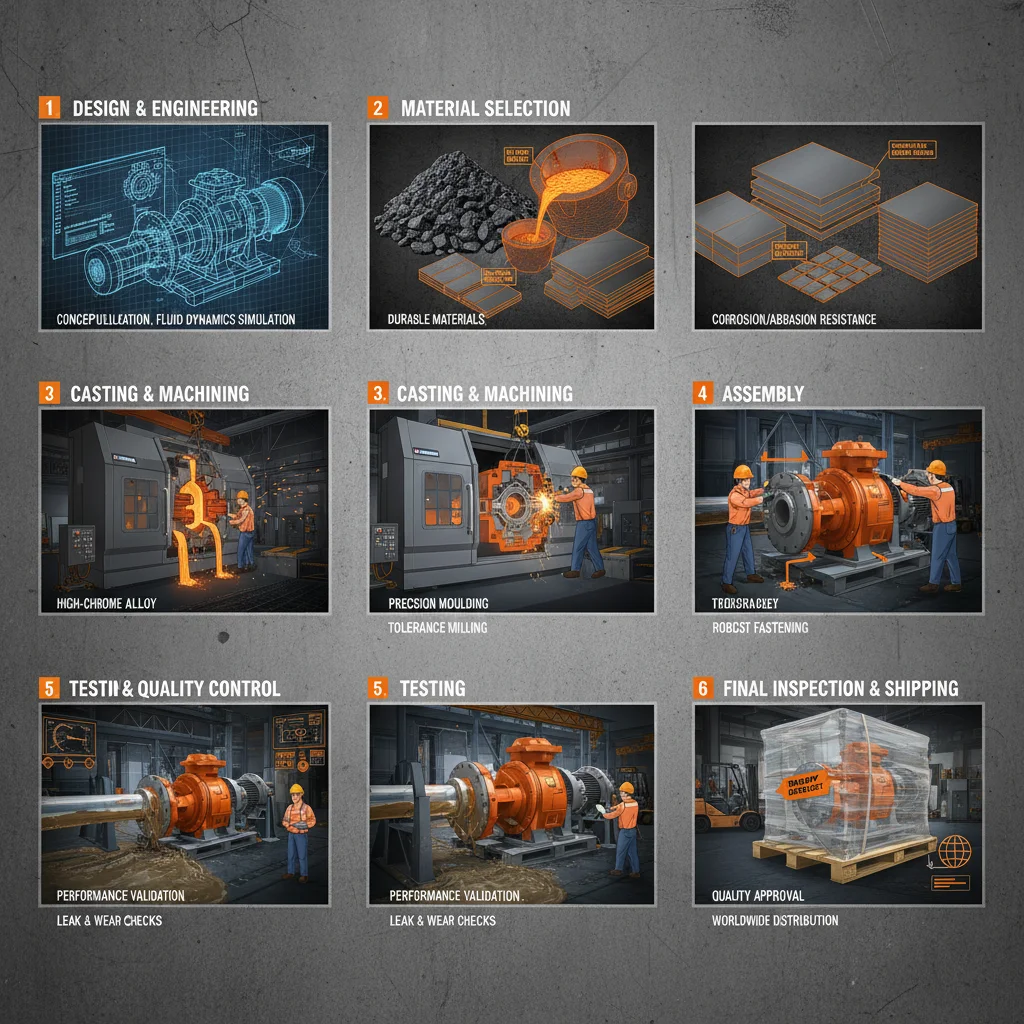
Material selection is the primary determinant of a pump's lifespan. When handling aggressive mineral slurries, standard cast iron is insufficient. High-chrome white iron (such as A05) is often employed for its extreme hardness and resistance to abrasive particles. For environments where corrosion is the dominant threat, stainless steel cast alloys provide the necessary chemical stability to prevent pitting and structural degradation over time.
Operating velocity is another critical variable. While higher flow rates are often desired, excessive velocity within the pump internals can lead to exponential increases in wear rates. A professional manufacturer balances the discharge diameter (ranging from 25mm to 250mm in the HSP series) with the intended flowrate to maintain a velocity that ensures solids transport without accelerating erosion.
Finally, the consistency of the suction level plays a vital role. Traditional horizontal pumps are prone to cavitation and seal failure when fluid levels drop. The integration of a vertical sump design allows the pump to maintain a stable prime, effectively mitigating the risks associated with low-fluid operation and reducing the frequency of emergency repairs.
In traditional slurry pump setups, the sealing system is often the most fragile component. Maintaining a constant supply of seal water to cool and lubricate the mechanical seals adds significant plumbing complexity and operational cost. Any failure in the seal water system can lead to immediate pump failure and hazardous leaks of abrasive slurry into the environment.
The HSP Series eliminates these vulnerabilities through a seal-free vertical design, removing the need for complex seal water systems. This innovation drastically reduces installation overhead and eliminates the primary cause of unplanned downtime in sump applications, ensuring continuous operation even during suction shortages.
Beyond maintenance savings, this architectural shift optimizes plant floor space. By integrating the pump vertically into the pit, the footprint of the pumping station is minimized. This is particularly valuable in dense mineral processing plants where every square meter of available space is critical for the overall workflow efficiency.
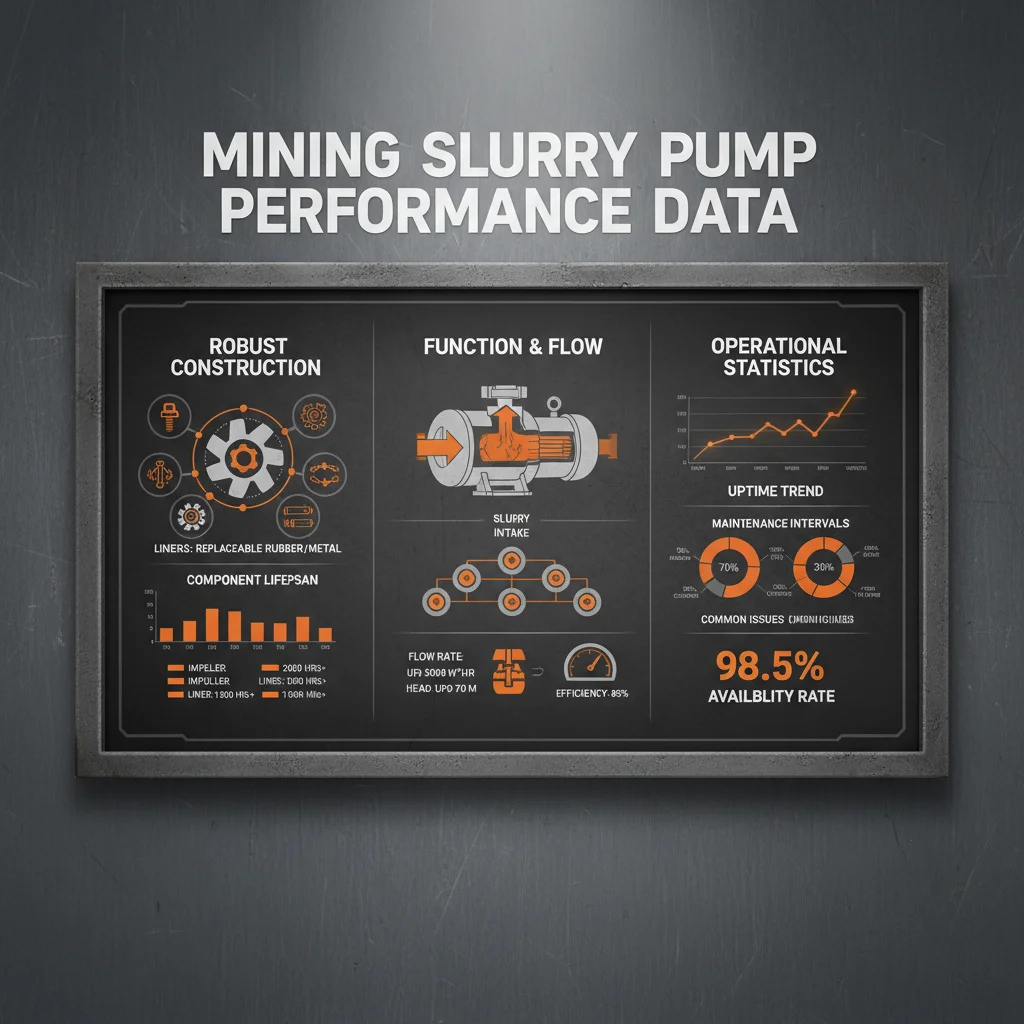
Efficiency in slurry pumping is measured by the ratio of hydraulic power delivered to the fluid versus the electrical power consumed. Due to the high density of the medium, internal friction is significant. High-performance designs, like those from Hihorn Pump, optimize the internal flow paths to achieve hydraulic efficiencies of up to 64%, which significantly lowers the energy cost per cubic meter of processed slurry.
Performance is further quantified by the relationship between flowrate and head. For the HSP series, the capacity can reach up to 1150 m³/h with a maximum head of 82m. These metrics allow engineers to precisely size the pump to the specific elevation and distance requirements of their industrial site, ensuring the system operates at its best efficiency point (BEP).
In the power generation sector, vertical sump pumps are indispensable for slag and ash removal. The pumps must handle high-temperature abrasive particles that would quickly erode standard equipment. By utilizing corrosion-resistant white iron and a vertical configuration, these systems can operate within the ash pits for extended periods without requiring frequent intervention.
Within the mining and metallurgy industries, these pumps are deployed in tailings management and mineral processing. The ability to choose between rubber-lined components for fine particles or high-chrome metal for coarse gravel ensures that the pump is tailored to the specific abrasiveness of the ore. This versatility allows for a standardized pump platform to be adapted to various roles across the production chain.
The industry is moving toward "smart" wear monitoring and advanced material composites. Future iterations of slurry pumps are likely to integrate predictive maintenance sensors that alert operators to liner thinness based on the total volume of slurry processed. This shifts the maintenance model from reactive or scheduled to purely condition-based, further reducing downtime.
Metallurgical innovations are also focusing on hybrid linings. By combining the impact resistance of rubber with the hardness of chrome alloys, manufacturers can create pumps that handle both fine silts and large gravel without compromising the casing integrity. This evolution reduces the need for multiple pump types in a single facility.
Additionally, energy recovery systems are being explored to capture the pressure energy from high-head slurry lines. When combined with high-efficiency hydraulics (64%+), these advancements will significantly lower the carbon footprint of heavy industrial fluid handling globally.
One of the most persistent challenges in slurry pumping is the trade-off between wear resistance and initial investment. While premium alloys like A05 white iron increase the upfront cost, they drastically reduce the lifecycle cost by extending the replacement interval for impellers and liners.
Another common constraint is the risk of "dry running," where a pump operates without sufficient fluid, leading to rapid overheating and catastrophic seal failure. The HSP series solves this through its vertical sump design, which maintains normal operation even during suction shortages, ensuring process continuity.
Finally, installation complexity often leads to misalignment and premature bearing failure. Moving toward integrated vertical units simplifies the alignment process, as the pump and motor are aligned on a single vertical axis, reducing the expertise required for rapid deployment in the field.
| Evaluation Factor | Standard Sump Pumps | HSP Series Sump Pump | Operational Impact |
|---|---|---|---|
| Seal Maintenance | High Cost (Water Req.) | Minimal (Seal-Free) | Lower OpEx |
| Low Fluid Risk | Prone to Dry-Run | Safe Operation | Higher Uptime |
| Material Lifespan | Standard Alloy Wear | Extended (A05/SS) | Less Downtime |
| Installation Space | Large Footprint | Compact Vertical | Space Optimization |
| Energy Cost | Variable Efficiency | High (Up to 64%) | Reduced Power Bill |
| Plumbing Complexity | High (Seal Water Lines) | Low (Simplified) | Faster Install |
The HSP Series is a vertical sump pump specifically engineered to eliminate the need for seal water systems. Unlike standard pumps that require constant water injection to protect seals, the HSP design works efficiently even in low-fluid conditions, which drastically reduces plumbing complexity and minimizes the risk of dry-run failures.
For corrosive environments, we recommend stainless steel cast alloys or corrosion-resistant white iron wetted parts. These materials provide a protective oxide layer that prevents chemical attack, ensuring the structural integrity of the pump and significantly extending its service life compared to standard cast iron.
Yes, it is specifically designed for high-abrasion applications in mineral processing and coal mining. We offer A05 white iron and rubber linings that provide extreme hardness and wear resistance, allowing the pump to move coarse particles without rapid internal erosion.
The HSP series offers a wide range of capacities to suit different industrial needs, with the largest models capable of delivering a flowrate of up to 1150 m³/h. This makes it suitable for both small-scale sump drainage and large-scale industrial slurry transport.
No, the HSP Series is engineered to operate without a seal water system. By utilizing a specialized vertical design and seal options like lip seals or sealing fillers, it removes the need for external water plumbing, which simplifies the overall installation and reduces ongoing maintenance costs.
They are primarily used in mineral processing, coal mining, and chemical plants. Additionally, they are frequently deployed in power plants for the efficient removal of slag and ash from sumps, where reliability in harsh, abrasive conditions is mandatory.
Optimizing slurry handling requires a precise balance between hydraulic efficiency, material durability, and system architecture. The shift toward seal-free vertical designs represents a significant leap in reducing operational risk and maintenance costs. By focusing on high-chrome alloys and optimized flow paths, enterprises can move from a cycle of frequent repairs to a model of sustainable, high-uptime production.
Whether you are upgrading an existing sump system or designing a new mineral processing line, selecting a partner who understands the nuances of abrasive fluid dynamics is essential. For professional guidance on material selection or custom vertical pump configurations, you are welcome to explore the technical solutions available at https://www.hihornpump.com.

If you are interested in our products, you can choose to leave your information here, and we will be in touch with you shortly.