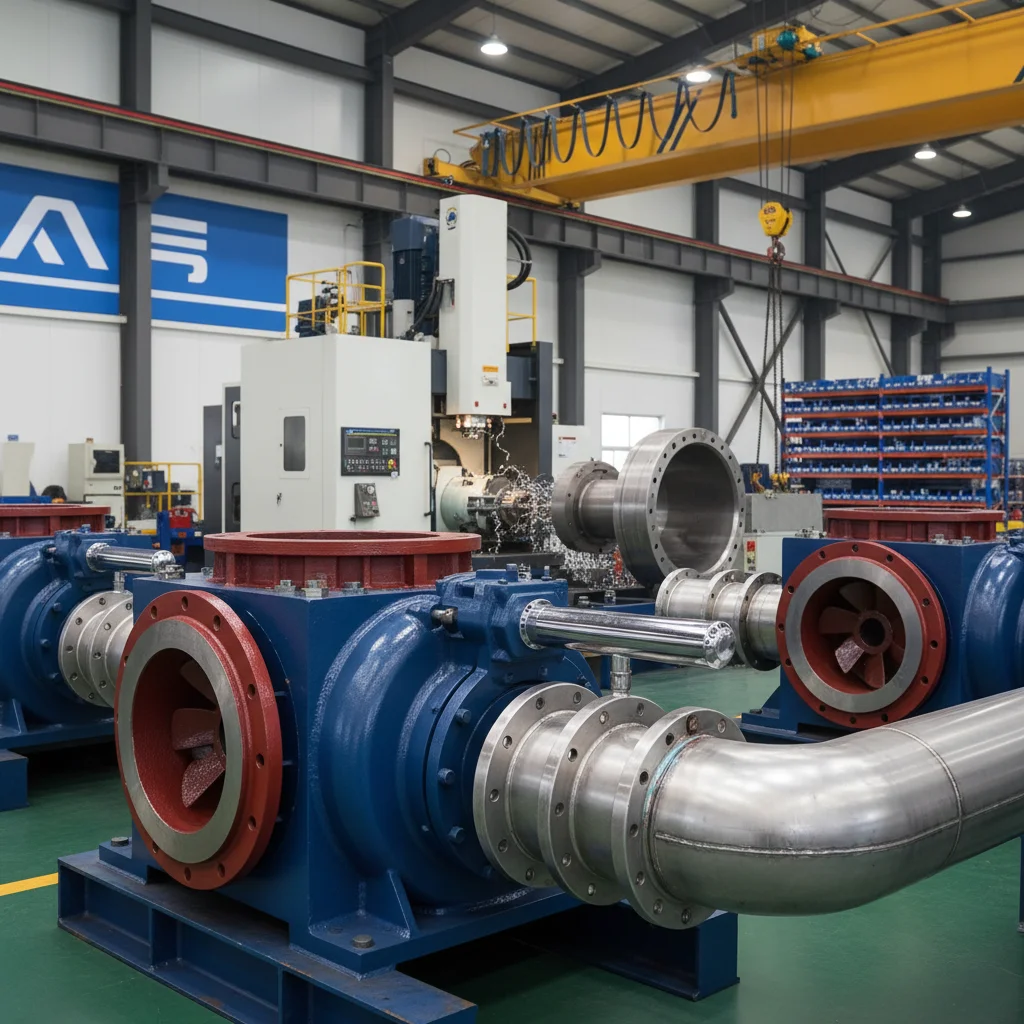
The global demand for efficient mineral processing and tailings management has placed a significant spotlight on the capabilities of the hydraulic dredge pump. In an era where industrial efficiency and environmental compliance are paramount, the ability to transport high-density abrasive slurries without frequent systemic failure is a critical operational requirement. For mining and metallurgy sectors, selecting a pump that balances high-pressure output with extreme wear resistance is the difference between continuous profit and costly unplanned downtime.
Modern industrial environments demand machinery that can withstand the relentless erosion caused by high-concentration slurries. Traditional pumping solutions often struggle with the sheer abrasiveness of mineral ores and coal fluids, leading to rapid liner degradation and operational instability. This challenge has driven the evolution of heavy-duty centrifugal designs, ensuring that material transport from hydrocyclones to flotation cells remains seamless and reliable.
By integrating advanced materials such as high chrome alloys and ductile iron, the hydraulic dredge pump provides a robust solution for the most demanding slurry requirements. These precision-engineered systems are designed to optimize the balance between flow rate and head, ensuring that dense materials are moved efficiently across complex plant piping layouts.

Engineering Excellence of Heavy Duty Slurry Pumps
The HAH series represents a pinnacle in the design of the hydraulic dredge pump, featuring a robust horizontal double-casing axial suction centrifugal design. This engineering approach is specifically tailored for the continuous transport of highly abrasive and dense slurries, ensuring that the structural integrity of the pump is maintained even under extreme hydraulic loads. By utilizing a ductile iron fully lined casing, these pumps offer an exceptional level of safety and strength that exceeds standard centrifugal options.
Beyond simple material movement, the focus of this series is systemic efficiency. The precision-engineered internals are designed to minimize turbulence and maximize the flow of high-concentration slurries, which is essential for applications like hydrocyclone feeds. This focus on hydraulic stability prevents premature wear and reduces the energy required to move dense materials, providing a sustainable edge in large-scale industrial operations.
Core Components and Material Durability
The heart of any reliable hydraulic dredge pump lies in its wetted pump ends. The HAH series provides customizable lining materials, allowing operators to choose between high chrome alloy and rubber depending on the nature of the slurry. High chrome alloys are indispensable for handling sharp, highly abrasive particles that would otherwise shred softer materials, while rubber linings offer superior corrosion resistance and durability for softer, abrasive mediums.
Ductile iron serves as the primary casing material, providing a rigid and high-strength outer shell that protects the internal liners. This fully lined design ensures that the outer casing is never exposed to the abrasive slurry, effectively eliminating the risk of catastrophic casing failure. Such a design philosophy significantly extends the service life of the equipment, reducing the frequency of total pump replacements.
Furthermore, the versatility of these pumps is enhanced by the interchangeable nature of the liners. Operators can switch between metal and rubber linings rapidly, allowing the plant to adapt to varying slurry characteristics or changes in ore quality without needing to replace the entire pump unit. This adaptability is crucial for maintaining operational continuity in volatile mining environments.
Strategic Applications in Global Mining
In the global mineral processing landscape, the hydraulic dredge pump is employed in critical stages of the production cycle. From the initial movement of raw ores in metallurgy to the complex transport systems in coal power plants, these pumps ensure that dense materials move consistently. Their ability to handle discharge diameters from 20mm up to 450mm makes them scalable for both boutique operations and massive industrial complexes.
A primary application is found in nonferrous mine tailings management, where the pump must transport a high concentration of abrasive waste to storage facilities. The HAH and HH series excel here by maintaining high-pressure stability, preventing the slurry from settling in the pipes, and ensuring that the tailings are moved efficiently over long distances without clogging the system.
Additionally, flotation and hydrocyclone feed systems rely on the precision of these pumps to maintain a constant flow rate, which is vital for the chemical and physical separation of minerals. By providing a stable hydraulic environment, the hydraulic dredge pump helps maximize the recovery rate of valuable minerals, directly impacting the profitability of the processing plant.
Performance Metrics and Pressure Tuning
Achieving the optimal balance between head and flow rate is the primary goal when configuring a hydraulic dredge pump. The HAH series offers a wide flowrate range from 6.5 to 30,000 m³/h and a maximum head of 90m. To meet specific site requirements, custom impeller configurations are used to tune the pressure, ensuring the pump can overcome the friction losses associated with high-density slurries.
For applications requiring even higher discharge pressures, the HH variant is introduced. This specific model is optimized for higher-density slurry applications where standard pumps would fail to maintain velocity. By increasing the pressure capability, the HH series ensures that the dense medium remains in suspension, preventing sedimentation and reducing the risk of pipeline blockages.
Slurry Handling Performance Comparison
Installation Flexibility and Piping Optimization
One of the most significant advantages of the HAH series hydraulic dredge pump is its flexible installation design. The outlet can be positioned in eight different directions at 45° intervals. This capability allows plant engineers to optimize the piping layout, reducing the need for unnecessary elbows and bends, which in turn minimizes friction loss and reduces the overall installation cost.
By tailoring the pump orientation to the existing plant infrastructure, companies can maximize their available space and simplify the flow path of the slurry. This spatial optimization not only improves the efficiency of the material transport but also makes the system easier to inspect and maintain, as piping is more logically organized and less prone to stress-induced leaks.
Maintenance Efficiency and Operational Uptime
Reducing unplanned downtime is critical in the mining industry, where a single pump failure can halt an entire production line. The hydraulic dredge pump addresses this through dual lubrication options, allowing users to choose between grease or oil lubrication. This flexibility ensures that the bearings are maintained according to the specific environmental conditions of the site, drastically reducing friction and extending bearing life.
Furthermore, the HAH series features simplified inspection ports that allow for real-time monitoring of liner wear. Instead of shutting down the system to check for erosion, operators can perform routine checks to optimize replacement cycles. This proactive approach to maintenance ensures that liners are replaced only when necessary, preventing both premature replacement and unexpected failure.
The availability of OEM-standard spare parts, including volute liners, throat bushes, and impellers, ensures a rapid restoration of operations. By syncing spare parts inventory with the specific requirements of the HAH and HH series, plants can minimize the mean time to repair (MTTR) and maintain a high level of operational uptime.
Long-Term Investment Value and TCO Analysis
When evaluating the procurement of a hydraulic dredge pump, the Total Cost of Ownership (TCO) is far more important than the initial purchase price. While standard centrifugal pumps may have a lower upfront cost, their lack of specialized lining leads to frequent liner changes and higher maintenance labor costs. In contrast, the HAH series' heavy-duty design significantly extends the lifecycle of the equipment.
The integration of ductile iron and interchangeable liners allows the pump to evolve with the project. As slurry concentrations change or as the mine moves into different ore veins, the pump can be adjusted rather than replaced. This adaptability ensures that the investment remains viable over several years of operation, providing a higher return on investment (ROI) through reduced replacement frequency.
Ultimately, the combination of reduced installation costs (due to the 8-way outlet) and extended wear life leads to a dramatically lower TCO. By investing in a high-performance slurry pump, operators secure a reliable foundation for their processing plant, ensuring that the systemic efficiency is never compromised by equipment failure.
Comparison of Standard vs. HAH Heavy Duty Slurry Pump Value
|
Performance Indicator
|
Standard Centrifugal
|
HAH Heavy Duty
|
Value Impact
|
| Wear Life |
Low (Frequent Change) |
High (Chrome/Rubber) |
Lower Parts Cost |
| Operational Uptime |
Moderate |
Maximum |
Higher Production |
| Slurry Density |
Thin Slurries Only |
Optimized for Dense |
Process Flexibility |
| Installation Cost |
Standard Piping |
Reduced (8-Way) |
Lower CAPEX |
| Maintenance Effort |
High (Corrective) |
Low (Predictive) |
Lower Labor Cost |
| Total Cost (TCO) |
Higher over time |
Lower via Lifecycle |
Better ROI |
FAQS
While both are heavy-duty, the HH series is specifically designed for higher-density slurry applications and can operate under significantly higher pressure conditions than the HAH series. This makes the HH variant ideal for the most challenging, high-viscosity slurry environments.
High chrome alloy is strongly recommended for handling sharp, highly abrasive particles that cause rapid surface erosion. Rubber lining, on the other hand, is ideal for softer abrasive slurries and provides excellent corrosion resistance for chemically aggressive mediums.
The pump is designed to allow the outlet to be positioned in 8 different directions (every 45°) during the setup phase. This ensures it can fit your specific plant layout perfectly, though changes after final piping installation would require piping modifications.
They are widely used in mineral processing plants, metallurgy, coal power plants, and nonferrous mine tailings management. Any industry requiring the transport of high-concentration abrasive fluids can benefit from this design.
The HAH series offers both grease and oil lubrication options. To ensure minimal friction and extend bearing life, regular lubrication should be performed according to the operation manual, tailored to the pump's specific lubrication system.
Yes, we provide a comprehensive range of OEM spare parts, including volute liners, throat bushes, frame plate liner inserts, and impellers. Using OEM parts is essential to maintain peak performance and ensure the continued validity of the pump's durability specifications.
Conclusion
The HAH and HH series heavy-duty slurry pumps redefine the standards for transporting abrasive materials in the mining and metallurgical sectors. By combining a robust ductile iron casing with customizable high chrome or rubber liners, these pumps solve the critical industry challenge of rapid wear and systemic instability. The addition of flexible outlet positioning and dual lubrication options ensures that each installation is optimized for both spatial efficiency and operational longevity.
As the industry moves toward higher automation and more stringent environmental regulations, the role of a reliable hydraulic dredge pump becomes even more vital. We recommend that operators prioritize Total Cost of Ownership over initial procurement costs to ensure long-term sustainability. For those looking to optimize their slurry handling systems and maximize plant uptime, investing in heavy-duty, precision-engineered pumping solutions is the most strategic path forward. Visit our website: www.hihornpump.com