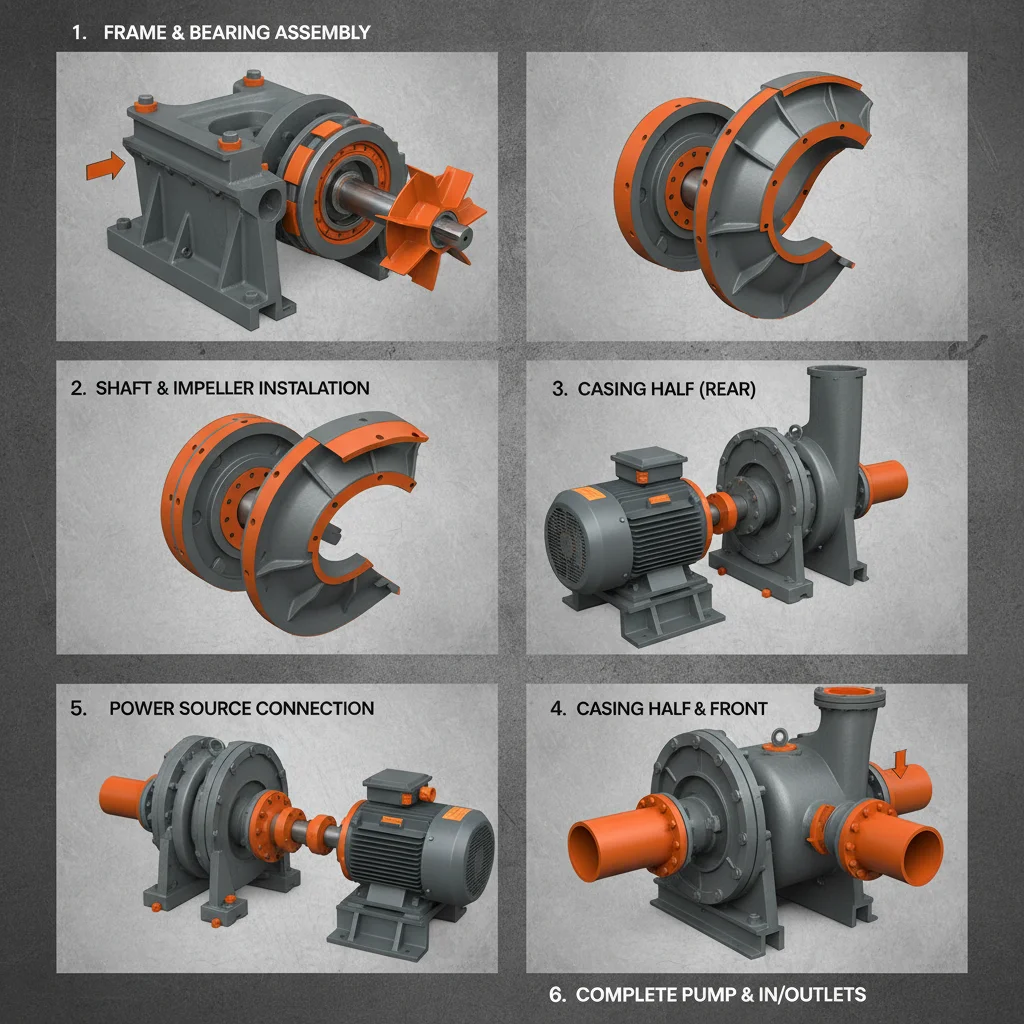
Look, slurry pump supplier isn’t just about moving mud. It’s the backbone of countless industries, from mining and wastewater treatment to construction and agriculture. We’re talking about keeping projects on schedule, minimizing downtime, and frankly, avoiding some seriously messy situations. Getting the right pump, from a reliable slurry pump supplier, can be the difference between a smooth operation and a costly disaster. I've seen it happen firsthand – a pump fails, everything grinds to a halt, and budgets get blown apart. It’s a real headache.
The need for efficient and dependable slurry handling is growing globally. Think about the increasing urbanization, the demand for more resources, and the stricter environmental regulations. The UN estimates that by 2050, nearly 70% of the world’s population will live in urban areas – that means more wastewater, more construction, and more demand for infrastructure that relies on moving abrasive materials. The World Bank consistently funds large-scale infrastructure projects, many of which depend on robust slurry pump suppliers to keep things running. It's not a niche market; it's absolutely vital.
And it's not always about huge operations. Even smaller projects, like dredging a local pond or managing runoff from a construction site, require careful consideration. Choosing the wrong pump can lead to environmental damage, fines, and a lot of unhappy neighbors. That’s why understanding the capabilities and limitations of different pumps, and working with a trusted slurry pump supplier, is absolutely crucial.

The Critical Role of slurry pump supplier
I’ve spent years walking around construction sites and mine operations. The one thing I can tell you for sure is this: you need a pump you can rely on. A good slurry pump supplier understands that. It's not just about the initial price tag; it's about the total cost of ownership. A cheap pump that constantly breaks down will cost you far more in the long run – lost production, expensive repairs, and a whole lot of frustration. We always look for pumps designed for the specific slurry we're handling; different abrasives and solids concentrations demand different solutions.
It’s also about the support you get after the sale. A solid slurry pump supplier will offer training, maintenance programs, and readily available spare parts. Because when a pump does go down – and they all do eventually – you need to get it back up and running as quickly as possible. That’s where a strong partnership with your supplier makes all the difference.
Defining Slurry Pump Supplier
A slurry pump supplier isn't simply a vendor selling equipment; they’re a partner in ensuring the efficient and reliable transfer of abrasive, corrosive, or otherwise challenging liquids and solids. They provide the pumps themselves, of course, but also the expertise to select the right pump for a specific application, along with ongoing support, parts, and maintenance. They need to understand the complexities of slurry characteristics—particle size, concentration, density, and chemical composition—to recommend the most effective solution.
In today’s world, a good slurry pump supplier does more than just sell pumps. They offer complete system solutions, including piping, valves, and control systems. They also need to be aware of environmental regulations and can help clients comply with local and international standards. It’s a holistic approach, not just a transactional one.
Essentially, they are the problem solvers for anyone dealing with the messy business of moving slurries. They provide the technical knowledge and equipment to keep operations flowing smoothly, safely, and efficiently, contributing directly to industrial productivity and environmental protection.
Key Factors for Selecting a slurry pump supplier
When I'm vetting a slurry pump supplier, there are a few things I always look for. First, durability. These pumps take a beating, so they need to be built to last. I want to see pumps with hardened materials, robust construction, and a proven track record in demanding environments. Second, the ability to handle variations in the slurry – changes in solids content, particle size, and flow rate. A pump that can’t adapt will quickly fail.
Third, efficiency is crucial. Nobody wants to burn through electricity just to move a bit of mud. A well-designed pump will minimize energy consumption and reduce operating costs. Fourth, consider scalability. Can the supplier offer pumps in a range of sizes to accommodate future expansion or changes in production? Finally, and this is often overlooked, is the supplier's ability to provide responsive service and support.
Global Applications of Slurry Pumping
You’ll find slurry pumps everywhere, honestly. In mining, they're essential for transporting ore, tailings, and process water. In the oil and gas industry, they handle drilling mud and produced water. Wastewater treatment plants rely on them to move sludge and grit. Even agriculture uses them for pumping manure and irrigation water.
I’ve seen them in operation in remote areas of Australia’s outback, in massive copper mines in Chile, and in bustling urban wastewater facilities in Europe. Post-disaster relief operations often require slurry pumps to remove debris and floodwater. In remote industrial zones like those in Siberia, reliable slurry pump suppliers are critical because getting parts and service is a major logistical challenge.
The common thread is the need to move abrasive, corrosive, or otherwise difficult materials efficiently and reliably. Regardless of the location or industry, the principles remain the same: select the right pump for the application, provide proper maintenance, and work with a supplier you can trust.
Slurry Pump Supplier Performance Metrics
Advantages and Long-Term Value
Investing in quality slurry pumps and a strong relationship with a slurry pump supplier delivers significant long-term benefits. Reduced downtime translates directly into increased production and revenue. Lower maintenance costs free up resources that can be allocated elsewhere. And improved energy efficiency lowers operating expenses and reduces your carbon footprint. We’re talking about real, tangible savings.
Beyond the financial benefits, there’s a safety aspect. A reliable pump minimizes the risk of leaks, spills, and equipment failures, protecting workers and the environment. A good supplier will also provide training on safe operation and maintenance procedures. Trust is a big factor here – you need to be confident that your equipment will perform as expected, even under the most challenging conditions.
Future Trends in Slurry Pump Technology
We’re seeing a lot of innovation in slurry pump technology right now. Smart pumps, equipped with sensors and data analytics, are becoming increasingly common. These pumps can monitor their own performance, predict maintenance needs, and even adjust their operation to optimize efficiency. We're also seeing a move towards more sustainable materials and designs, with a focus on reducing energy consumption and minimizing environmental impact.
Digital transformation is playing a big role. Remote monitoring and diagnostics allow suppliers to troubleshoot problems and provide support from anywhere in the world. Automation is also becoming more prevalent, with pumps being integrated into larger, automated systems. And, of course, the demand for pumps that can handle even more abrasive and corrosive slurries continues to drive innovation in materials science.
Challenges and Innovative Solutions
Despite all the advancements, challenges remain. Handling highly abrasive slurries still leads to wear and tear, requiring frequent maintenance and replacement of parts. Maintaining consistent pump performance in fluctuating flow conditions can be difficult. And, as I mentioned earlier, logistics can be a nightmare when working in remote locations.
But there are solutions. New materials, like advanced ceramics and polymers, are offering improved wear resistance. Variable speed drives (VSDs) allow pumps to adjust their speed to match changing flow rates, optimizing efficiency and reducing stress on the pump. And suppliers are developing modular pump systems that can be easily transported and assembled on-site, even in remote areas. The companies who listen to people in the field – those of us getting our hands dirty – are the ones who'll come up with the best solutions.
Proper slurry analysis and pump selection are still the best solutions to reduce these problems. Working with a knowledgeable slurry pump supplier that offers testing and consultation services can save you a lot of headaches down the road.
A Comparison of Common Slurry Pump Solutions
| Pump Type |
Typical Applications |
Wear Resistance (1-10) |
Maintenance Frequency (1-10) |
| Centrifugal Slurry Pump |
Mining, Wastewater, General Slurry Transfer |
6 |
5 |
| Positive Displacement Pump (Diaphragm) |
Chemical Processing, Sludge Transfer, Abrasive Slurries |
8 |
3 |
| Vertical Slurry Pump (Submersible) |
Sumps, Pits, Dewatering, Mining |
7 |
4 |
| Impeller Pump |
High-head, low-flow applications, chemical dosing. |
5 |
6 |
| Piston Pump |
High-pressure slurry applications, grout pumping |
9 |
2 |
| Screw Pump |
Viscous slurries, handling delicate solids |
7 |
4 |
FAQS
For highly abrasive slurries, positive displacement pumps like diaphragm pumps or piston pumps are often preferred due to their robust construction and ability to handle high solids concentrations with minimal wear. Impeller pumps with hardened materials are also a good choice, but require more frequent monitoring and maintenance. A quality slurry pump supplier can help you assess your specific slurry composition and recommend the best option.
Regular inspection is crucial. I recommend a visual inspection at least weekly, checking for leaks, unusual noises, and excessive vibration. A more thorough inspection, including checking impeller wear and bearing lubrication, should be performed monthly. And, of course, keep detailed maintenance records to track pump performance and identify potential issues before they become major problems. Partnering with a slurry pump supplier that offers preventative maintenance programs can streamline this process.
Several factors impact efficiency. Slurry viscosity, solids concentration, pipe diameter, and pump speed all play a role. Proper pump sizing is critical – an undersized pump will struggle, while an oversized pump will waste energy. Also, ensure that the pump is operating at its best efficiency point (BEP). Consult with a slurry pump supplier to optimize pump selection and operation for your specific application.
Material selection is paramount. The slurry’s chemical composition, pH level, and abrasive particle size dictate the appropriate materials. Common choices include cast iron, stainless steel, rubber lining, and ceramic coatings. Corrosive slurries require corrosion-resistant materials like stainless steel or specialized alloys. A slurry pump supplier with material science expertise can guide you through this process.
VSDs allow you to adjust the pump speed to match the actual flow demand. This reduces energy consumption, minimizes wear and tear on the pump, and improves process control. VSDs are particularly beneficial in applications with fluctuating flow rates. A good slurry pump supplier can integrate VSDs into your pump system and provide training on their operation.
Focus on preventative maintenance, proper pump selection, and energy efficiency. Invest in high-quality pumps from a reliable slurry pump supplier. Consider implementing a condition monitoring program to detect potential problems early. And explore opportunities to optimize your slurry handling process to reduce pump wear and tear.
Conclusion
In conclusion, selecting the right slurry pump and partnering with a reputable slurry pump supplier are critical for ensuring efficient, reliable, and cost-effective operations across a wide range of industries. From mining and wastewater treatment to construction and agriculture, these pumps are the workhorses that keep essential processes running smoothly. By focusing on durability, scalability, efficiency, and long-term support, you can maximize your return on investment and minimize downtime.
Looking ahead, the future of slurry pumping will be shaped by advancements in materials science, digital technology, and sustainable design. Embracing these innovations will allow us to address increasingly complex challenges and optimize performance while minimizing our environmental impact. Don't hesitate to reach out to experts in the field to find the best solution for your specific needs.