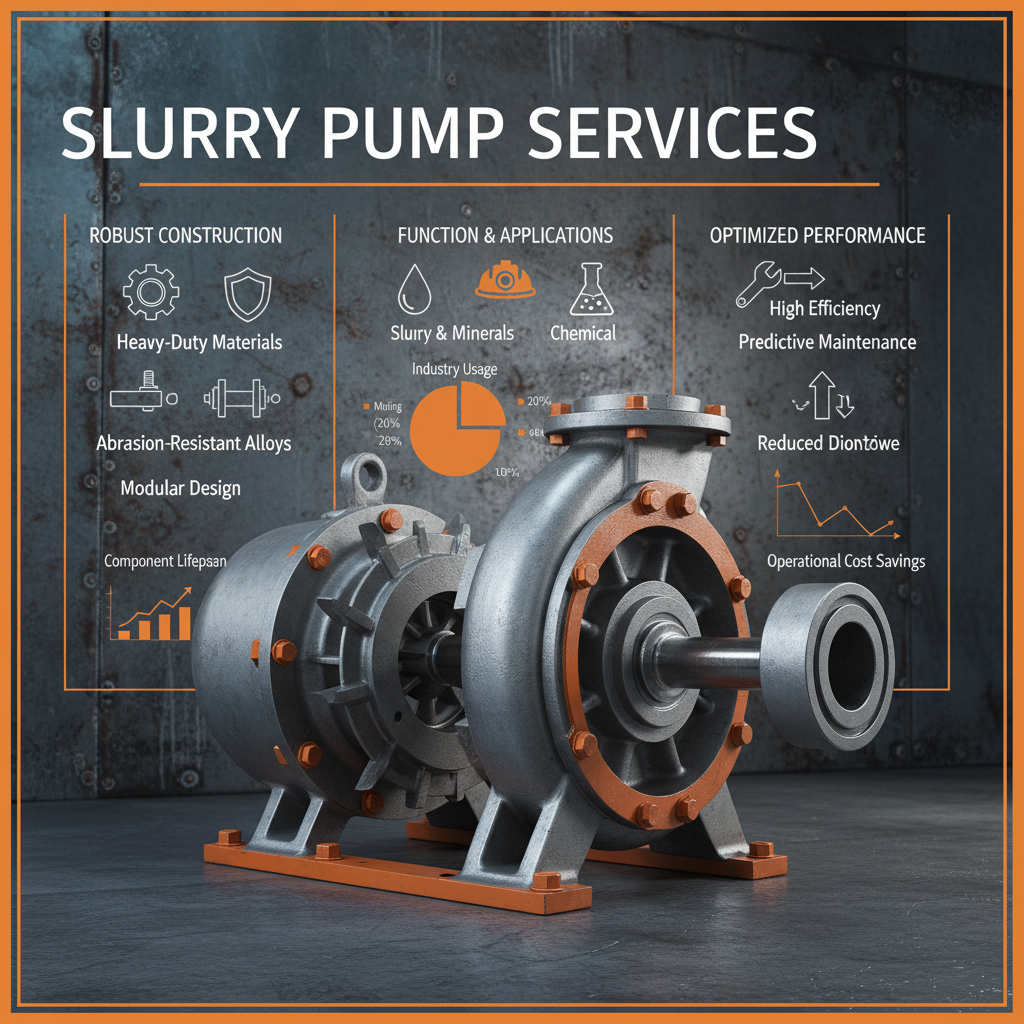
Slurry pump services are fundamental to a vast array of industrial processes globally, ranging from mining and wastewater treatment to chemical processing and agricultural operations. These services encompass the supply, installation, maintenance, and repair of pumps designed to move abrasive, corrosive, and highly viscous fluids – collectively known as slurries. Efficient and reliable slurry handling is critical for operational productivity, environmental compliance, and cost control, making specialized slurry pump services indispensable across numerous sectors.
The demand for robust slurry pump services is driven by increasing industrialization, stricter environmental regulations, and the growing need for resource optimization. Globally, industries are investing heavily in technologies that improve efficiency and reduce downtime, further boosting the demand for preventative maintenance and rapid response repair services. Furthermore, the rise of sustainable practices is pushing the development of more energy-efficient and environmentally friendly slurry pumping solutions.
Understanding slurry pump services isn't merely about mechanical equipment; it’s about optimizing entire processes, ensuring safety, and minimizing environmental impact. From selecting the right pump for a specific application to implementing comprehensive maintenance programs, expert slurry pump services provide tangible benefits that translate into substantial long-term value for businesses and communities alike. For specialized assistance, consider reaching out to slurry pump services experts.
Introduction to Slurry Pump Services
The field of slurry pump services has evolved significantly, driven by technological advancements and increasing demands for operational efficiency. Initially focused on basic pump maintenance and repair, modern slurry pump services now encompass a comprehensive suite of solutions, including pump selection, system design, predictive maintenance, and emergency support. The ability to accurately diagnose and address slurry pumping challenges is a key differentiator for service providers.
The effectiveness of slurry pump services directly impacts the bottom line of numerous industries. Downtime due to pump failure can result in significant production losses, costly repairs, and potential safety hazards. Therefore, proactive maintenance programs and rapid response capabilities are critical components of a comprehensive slurry pump service offering. Partnering with a reliable service provider like slurry pump services can mitigate these risks and ensure continuous operation.
Defining Slurry Pump Services
Slurry pump services encompass the complete lifecycle management of pumps designed for handling abrasive, corrosive, and viscous fluids. This includes initial consultation and pump selection tailored to the specific slurry characteristics and application requirements. Installation services ensure proper setup and integration with existing systems. Regular maintenance programs, including inspections, lubrication, and component replacement, are essential for preventing breakdowns.
Beyond preventative maintenance, slurry pump services also provide repair and overhaul capabilities, addressing issues such as wear, corrosion, and cavitation. Specialized services like impeller balancing, seal replacement, and pump performance testing ensure optimal efficiency and reliability. Furthermore, many service providers offer emergency repair services to minimize downtime in critical applications.
The connection to modern industry and humanitarian needs is profound. From enabling resource extraction in mining operations to treating wastewater for safe discharge, slurry pump services are integral to sustainable industrial practices. In emergency response situations, such as flood control and disaster relief, slurry pumps play a vital role in removing debris and restoring essential services.
Core Components of Effective Slurry Pump Services
One key component is Durability. Slurry pumps are subjected to extreme conditions, so the services must focus on extending pump life through high-quality materials, proper installation, and proactive maintenance. This involves selecting pumps constructed from abrasion-resistant alloys and implementing wear-monitoring programs.
Another crucial aspect is Scalability. Slurry pump service providers must be able to handle projects of varying sizes, from servicing a single pump in a small facility to managing large-scale pumping systems in a sprawling industrial complex. This requires a flexible service model and a team of skilled technicians capable of adapting to diverse operational environments.
Cost Efficiency is also paramount. Effective slurry pump services should not only minimize downtime but also optimize energy consumption and reduce maintenance costs. This can be achieved through implementing predictive maintenance strategies, utilizing energy-efficient pump technologies, and providing comprehensive training for on-site personnel. Finally, Expertise and Responsiveness are critical. Skilled technicians with in-depth knowledge of slurry pump technology are essential for accurate diagnosis and effective repairs. Quick response times minimize downtime and ensure continuity of operations.
Global Applications of Slurry Pump Services
Slurry pump services are vital in the mining industry, where they are used to transport ore slurries, tailings, and process water. In wastewater treatment plants, slurry pumps handle sludge, grit, and other abrasive materials. The chemical processing industry relies on slurry pumps for moving corrosive and viscous fluids.
In agricultural operations, slurry pumps are used for irrigation, manure handling, and fertilizer application. Regions with extensive mining activities, such as Australia, Chile, and Canada, have a particularly high demand for specialized slurry pump services. Similarly, rapidly industrializing countries in Asia, like China and India, are experiencing significant growth in demand.
In post-disaster relief operations, slurry pumps can be used to remove floodwater and debris. In remote industrial zones, where access to skilled technicians is limited, remote monitoring and diagnostic services are crucial. Organizations such as the World Bank and the UN often rely on reliable slurry pumping systems for water management and infrastructure projects.
Slurry Pump Services Performance Metrics
Advantages and Long-Term Value
The tangible benefits of investing in quality slurry pump services include reduced downtime, lower maintenance costs, and increased operational efficiency. Implementing preventative maintenance programs can significantly extend pump life, minimizing the need for costly repairs or replacements. The long-term cost savings often outweigh the initial investment in professional services.
From a sustainability perspective, efficient slurry pumping systems reduce energy consumption and minimize environmental impact. The use of durable, long-lasting pumps reduces waste and conserves resources. Reliable slurry handling also contributes to safety by preventing spills and leaks that could pose environmental or health hazards. Trustworthy slurry pump services builds confidence and enhances a company's reputation.
Future Trends in Slurry Pump Services
One emerging trend is the increasing adoption of digital technologies, such as remote monitoring and predictive maintenance. Sensors embedded in pumps can collect real-time data on performance, vibration, and temperature, allowing service providers to identify potential issues before they lead to failures. This proactive approach minimizes downtime and optimizes maintenance schedules.
Another key trend is the development of more energy-efficient pump designs and materials. Advances in materials science are leading to the creation of pumps that can handle more abrasive slurries with less wear and tear, reducing energy consumption and extending pump life. The integration of automation and artificial intelligence into slurry pump systems will also drive greater efficiency and reliability.
Challenges and Innovative Solutions
A common challenge in slurry pump services is dealing with highly abrasive and corrosive slurries that quickly degrade pump components. Innovative solutions include the use of advanced materials like ceramic linings, tungsten carbide coatings, and specialized polymers that offer superior wear resistance.
Another challenge is maintaining pump efficiency in fluctuating operating conditions. Variable frequency drives (VFDs) can be used to adjust pump speed to match the flow rate, optimizing energy consumption and reducing wear. The development of self-cleaning pumps that prevent clogging and buildup is also a promising area of innovation.
Addressing the shortage of skilled technicians is crucial. Investing in training programs and utilizing remote diagnostics tools can help overcome this challenge. Developing standardized maintenance procedures and leveraging data analytics can also improve the efficiency and effectiveness of slurry pump services.
Core Components of Slurry Pump Service Performance
| Component |
Importance Level (1-10) |
Impact on Downtime |
Cost of Implementation |
| Pump Material Selection |
9 |
High |
Medium |
| Preventative Maintenance Scheduling |
10 |
Very High |
Low |
| Operator Training |
7 |
Medium |
Low |
| Remote Monitoring Systems |
8 |
Medium |
High |
| Emergency Repair Response Time |
9 |
Very High |
Medium |
| Slurry Analysis & Compatibility |
8 |
High |
Medium |
FAQS
With a well-executed preventative maintenance program, a slurry pump can realistically operate for 5-10 years or even longer. The lifespan depends heavily on the slurry’s abrasiveness, corrosivity, and the quality of the pump materials. Regular inspections, seal replacements, impeller balancing, and bearing lubrication are vital for maximizing pump life. Proactive monitoring of wear indicators can help identify issues before they escalate into major failures.
Inspection frequency depends on the application’s severity, but a general guideline is to inspect pumps monthly or after every 200-500 hours of operation. During inspections, focus on checking for wear on impellers, liners, seals, and bearings. Monitor for signs of cavitation, corrosion, and erosion. Record all findings and track wear rates to predict future maintenance needs. Utilizing remote monitoring systems can automate this process.
Several factors are crucial: the slurry’s specific gravity, viscosity, particle size, and abrasiveness. You also need to consider the flow rate, head requirements, and the operating environment. The pump’s material of construction must be compatible with the slurry’s chemical composition. Consulting with a slurry pump specialist is highly recommended to ensure proper pump selection for optimal performance and longevity.
Cavitation occurs when the pressure within the pump drops below the vapor pressure of the slurry, forming bubbles that collapse violently. This can cause significant damage to the impeller and pump casing. Prevention involves ensuring adequate suction head, minimizing suction lift, properly sizing the pump, and avoiding operating the pump at excessively high speeds. Regular monitoring for signs of cavitation is also essential.
Predictive maintenance uses data analysis and condition monitoring to identify potential pump failures before they occur. Benefits include reduced downtime, lower maintenance costs, extended pump life, and improved safety. Techniques include vibration analysis, oil analysis, thermography, and ultrasonic testing. Implementing a predictive maintenance program allows for proactive scheduling of repairs and reduces the risk of catastrophic failures.
Slurry pump services ensure pumps are operating efficiently to minimize energy consumption and reduce emissions. Proper pump selection and maintenance prevent leaks and spills, protecting soil and water resources. Reliable slurry handling systems are crucial for wastewater treatment plants, enabling them to meet stringent discharge regulations. Choosing a service provider committed to sustainable practices contributes to environmental responsibility.
Conclusion
In conclusion, slurry pump services are an indispensable element of modern industry and infrastructure, driving efficiency, sustainability, and reliability across a wide range of applications. From ensuring the smooth operation of mining operations to safeguarding environmental quality in wastewater treatment plants, the expertise and technologies offered by specialized service providers are paramount to success. Investing in proactive maintenance, adopting innovative solutions, and partnering with reputable service providers are key to maximizing the long-term value of slurry pumping systems.
Looking ahead, the integration of digital technologies, the development of advanced materials, and a continued focus on sustainability will shape the future of slurry pump services. Embracing these trends will enable industries to overcome challenges, optimize performance, and contribute to a more sustainable future. For reliable and comprehensive slurry pump services, connect with industry leaders dedicated to innovation and customer satisfaction.