When calculating the total cost of ownership for abrasive material handling, the initial gravel pump price is often the least significant variable in the long-term operational budget. For industries dealing with high-concentration solids, the true financial impact lies in the intersection of material hardness, wear cycle synchronization, and energy efficiency.
Procurement teams frequently encounter a paradox where lower-priced equipment leads to exponential increases in maintenance labor and unplanned downtime. In the context of industrial centrifugal slurry pumps, the value proposition shifts from the purchase price to the cost per cubic meter of material transported over the equipment's lifespan.
This analysis examines the technical drivers that influence pricing and performance in the gravel pumping sector, providing a framework for evaluating equipment based on total operational ROI rather than upfront expenditure.


The market for gravel pumps is divided between general-purpose centrifugal units and specialized heavy-duty slurry pumps. The price variance between these categories is driven primarily by the metallurgy of the overflow parts—the impellers, sheaths, and liners—which must withstand the constant bombardment of abrasive solids.
When analyzing the gravel pump price, one must consider the trade-off between initial capital expenditure (CAPEX) and long-term operating expenditure (OPEX). A pump utilizing standard cast iron may be cheaper initially but fails rapidly under high-pressure abrasive conditions, leading to excessive replacement costs.
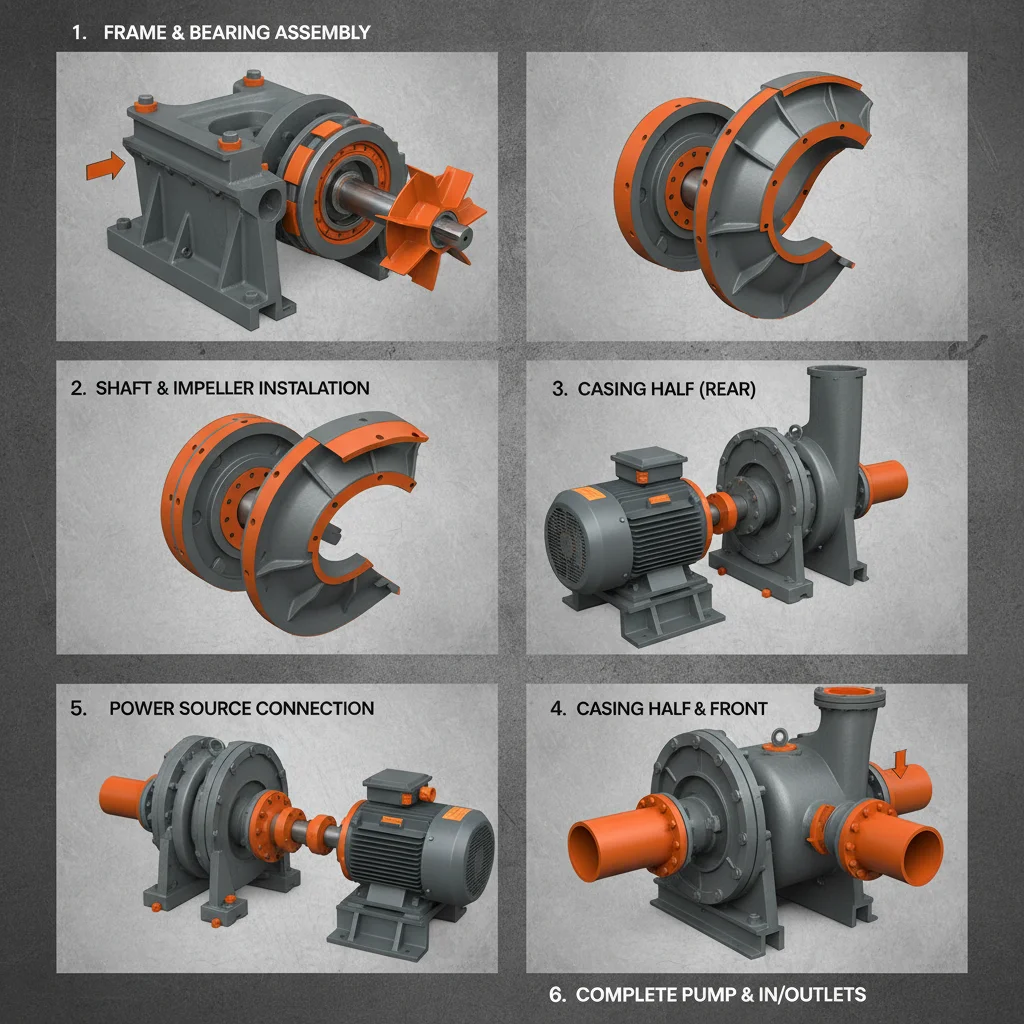
The structural integrity of a gravel pump is defined by its casing design and its ability to handle cavitation. For instance, the difference between a single-pump casing (typically used for mid-range capacities) and a reinforced double-pump casing is significant when dealing with extreme volumes and high discharge pressures. The double-casing architecture provides the necessary mechanical strength to prevent deformation under hydraulic stress.
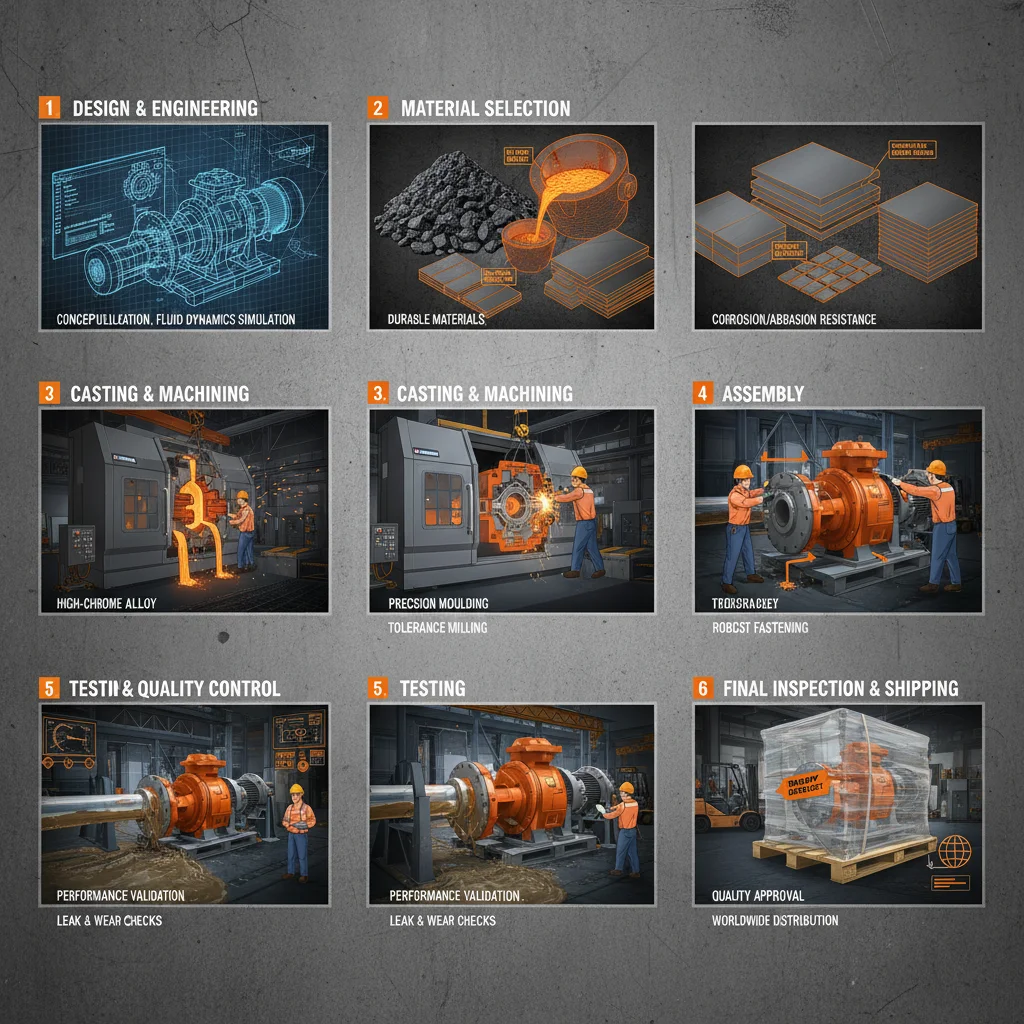
Another critical value driver is the optimization of impeller flow channels. A well-engineered impeller reduces turbulence and minimizes the velocity of solids against the pump walls, which directly extends the life of the wear parts. This precision machining requires advanced manufacturing capabilities, such as CNC boring and precision milling, which are integrated into high-end production lines.
Furthermore, the adaptability of the pump's performance curve allows operators to adjust flow rates and head pressure by modifying the impeller diameter or pump speed. This flexibility ensures that the pump operates at its Best Efficiency Point (BEP) even as the material density or site requirements change, preventing premature wear caused by operating far from the design point.
In traditional slurry pump maintenance, different components—such as the impeller and the liner—wear at different rates. This leads to a fragmented maintenance schedule where the pump is dismantled frequently to replace a single failed part, causing significant operational downtime and unnecessary labor costs.
The strategic synchronization of wear cycles across all critical overflow parts ensures that the impeller, sheath, and liner reach their replacement threshold simultaneously, thereby maximizing the interval between maintenance shutdowns.
This synchronization is achieved through precise material matching and geometric design. By utilizing high-strength anti-wear alloy cast iron with a hardness rating of ≥50 HRC, manufacturers can ensure that the impact resistance and abrasion resistance are balanced across the entire fluid path. This approach transforms maintenance from a reactive "failure-fix" cycle into a predictive, planned operation.
Evaluating a pump's effectiveness requires looking beyond the flow rate. The relationship between suction capacity and digging depth is paramount in dredging and mining. Enhanced cavitation performance allows for a higher concentration of solids to be transported without damaging the impeller, which is a primary indicator of high-end engineering.
When comparing standard pumps to high-performance series like the HWN, the difference in efficiency ranges (often 60% to 85%) results in massive energy savings over a year of 24/7 operation. The following index illustrates the relative impact of different technical factors on the overall value of a gravel pumping system.
Selecting the correct pump depends heavily on the specific abrasive profile of the material. For example, in a typical dredging operation where the solids concentration is high and the particle size can reach up to 220mm, a horizontal cantilever structure with a reinforced casing is essential. Using a pump designed for light slurry in a heavy gravel environment will result in catastrophic impeller failure within days.
Buyers should prioritize customizable output over fixed performance. The ability to fine-tune the pump speed or modify the impeller diameter after installation allows the equipment to adapt to the actual site viscosity and flow requirements, effectively eliminating the risk of over-specifying or under-specifying the hardware.
The transition from standard high-chrome irons to advanced anti-wear alloys (≥50 HRC) has fundamentally changed the maintenance landscape of industrial pumps. These alloys provide a critical balance between hardness (to resist abrasion) and toughness (to resist impact from large gravel particles), preventing the cracking and chipping common in overly brittle materials.
Modern manufacturing processes, including the use of furan resin sand production lines and intermediate frequency induction electric furnaces, allow for a more homogenous casting structure. This reduces internal stress points within the pump casing, which is vital for pumps operating under high-pressure conditions.
As the industry moves toward "intelligent" fluid delivery, the integration of real-time wear monitoring and predictive scheduling is becoming the new standard. By tracking the actual volumetric loss of the liner, operators can schedule replacements based on data rather than generic time intervals, further reducing the gravel pump price impact over the life of the project.
To accurately compare pumping solutions, one must move beyond the sticker price and employ a weighted evaluation matrix. This matrix should account for material lifespan, maintenance frequency, and the ability of the pump to handle varying concentrations of solids without losing prime.
A critical trade-off often exists between suction depth and flow efficiency. While some pumps offer extreme suction, they may suffer from poor energy efficiency at high flow rates. A balanced design, characterized by optimized cavitation performance and wide impeller channels, provides the best versatility for large-scale projects.
The following table provides a conceptual comparison between standard industrial dredge pumps and high-performance anti-wear series, highlighting the key technical shifts that justify a higher initial investment.
| Evaluation Factor | Standard Pumps | High-Performance Series | Operational Impact |
|---|---|---|---|
| Material Hardness | Standard Cast Iron | Anti-wear Alloy (≥50HRC) | Significantly lower wear rate |
| Wear Cycle | Irregular/Fragmented | Synchronized Parts | Reduced maintenance downtime |
| Suction Depth | Limited | Enhanced Cavitation Depth | Higher solids concentration |
| Performance Curve | Fixed/Linear | Dynamic/Sharp | Rapid adaptability to density |
| Casing Design | Single-wall | Reinforced Double-wall | Higher pressure tolerance |
| Life-Cycle Cost | High OPEX | Optimized ROI | Lower long-term cost per m³ |
The primary price drivers are the metallurgy of the overflow parts and the complexity of the casing. Pumps using high-strength anti-wear alloy cast iron (≥50 HRC) are more expensive than those using standard cast iron but offer vastly superior durability in abrasive environments. Additionally, double-pump casing designs for high-volume models increase structural costs but are necessary for handling extreme pressures and particle sizes.
Synchronized wear means that the impeller, liner, and sheath are designed to wear out at approximately the same time. In standard pumps, you might replace a liner every 3 months but an impeller every 9 months, requiring three separate shutdowns. With synchronized wear, you perform one comprehensive replacement every 9 months, drastically reducing labor costs and avoiding the revenue loss associated with repeated operational downtime.
Yes, high-performance series like the HWN are designed for adaptability. Operators can achieve different flow rates and head pressures by either adjusting the RPM of the pump motor using a variable frequency drive (VFD) or by modifying the diameter of the impeller. This allows the pump to be fine-tuned to the actual slurry viscosity and site-specific requirements encountered during the project.
A sharp performance curve means the pump is highly responsive to changes in displacement and material density. In active dredging, the concentration of solids fluctuates constantly. A pump with this characteristic can adapt quickly to these changes without experiencing sudden surges or cavitation, ensuring a more stable transport of abrasive materials and protecting the internal components from shock loads.
The choice between oil and grease lubrication depends on the operating environment and maintenance access. Oil lubrication generally provides better heat dissipation and is preferred for high-load, continuous operations. Grease lubrication is often simpler to maintain and more resistant to contamination in extremely dusty or wet environments. Most professional series offer both configurations to suit the specific site conditions.
The most common mistake is focusing on the initial purchase price (CAPEX) while ignoring the Total Cost of Ownership (TCO). A "cheap" pump often has a much higher cost per cubic meter of material moved because of frequent part failures and higher energy consumption. Professional buyers evaluate the cost of the pump plus the cost of spare parts and electricity over a 5-year period to determine the true value.
Optimizing the efficiency of abrasive material transport requires a shift in perspective from procurement cost to operational value. The integration of advanced anti-wear alloys, synchronized wear cycles, and flexible performance curves transforms the gravel pump from a simple mechanical component into a strategic asset that minimizes downtime and maximizes throughput.
Ultimately, the most cost-effective solution is one that balances high-grade metallurgy with precise engineering, ensuring that the equipment survives the harsh reality of the industrial field while maintaining a low cost-per-ton ratio over its entire service life.

If you are interested in our products, you can choose to leave your information here, and we will be in touch with you shortly.